Materials
Every piece starts with the right material. Below is an overview of the main materials we use most often, to help you choose what best fits your project, budget and how the piece will be used. Not sure what's right for you? Get in touch and we'll advise based on your project.
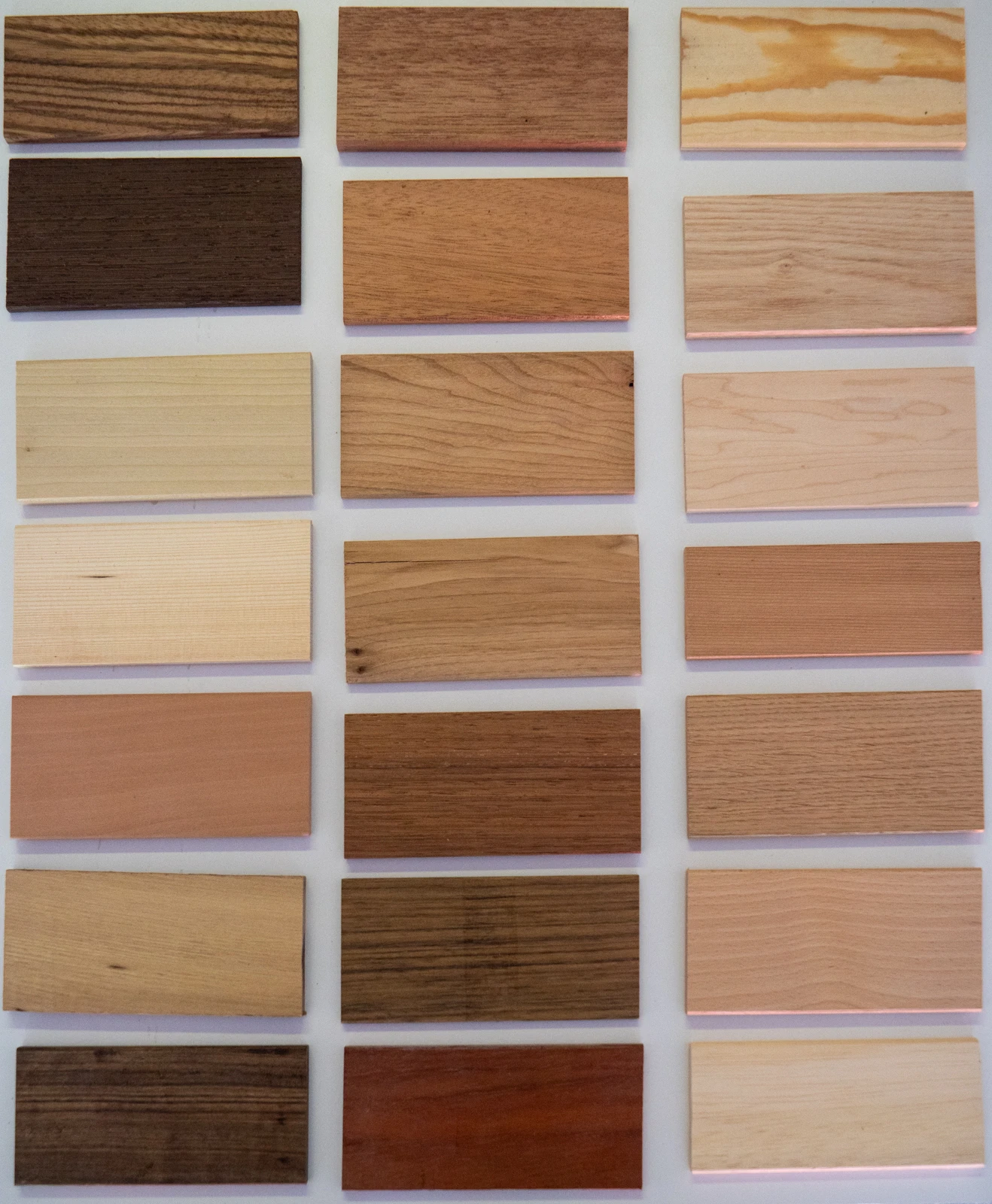
Solid Wood
Oak · Walnut · Ash · Beech · Pine
Real, single-piece timber with natural grain and character. The classic choice for furniture meant to last generations and to be repaired, refinished or passed down.
Indoor & sheltered outdoor
Price: €€€
Pros
- Authentic look and feel
- Very durable, repairable
- Ages well, can be refinished
Cons
- Higher cost
- Moves with humidity
- Species availability varies
Maintenance: Oil or wax every 1–2 years; sensitive to prolonged moisture and direct sun.

Veneered Panels
Thin real-wood veneer over MDF or plywood core
A thin layer of real wood glued onto a stable panel core. Gives the warmth and grain of solid wood on large, flat surfaces, without the movement or cost of solid timber.
Indoor use
Price: €€
Pros
- Real wood appearance
- Very stable, won't warp
- Good for large panels
Cons
- Veneer can chip at edges
- Cannot be sanded/refinished as often
- Repairs are more visible
Maintenance: Dust and clean gently; avoid excess water at seams and edges.

Bamboo Panel
Pressed and laminated bamboo strips
A fast-growing, renewable grass pressed into strong, stable panels. Distinctive linear grain, and one of the more sustainable options available.
Indoor use
Sustainable choice
Price: €€
Pros
- Very sustainable
- Hard, dent-resistant surface
- Distinctive, modern look
Cons
- Can yellow with UV exposure
- Sensitive to humidity swings
- Limited color/grain variation
Maintenance: Occasional oiling; keep out of direct sunlight to preserve color.

Multiplex
Birch plywood, visible layered edge
Many thin layers of wood glued cross-grain into a strong, stable panel. Its striped edge is often left visible as a design feature rather than covered up.
Indoor use
Price: €€
Pros
- Strong and very stable
- Distinctive layered edge look
- Good screw and joint holding
Cons
- Edges need sealing/finishing
- Visible grain may not suit all styles
- Heavier than particleboard options
Maintenance: Low; occasional oil or lacquer top-up on exposed edges.

OSB
Oriented strand board
Compressed wood strands bonded under heat and pressure. Originally a structural/building material, increasingly chosen for its raw, industrial look in furniture and interiors.
Indoor use
Price: €
Pros
- Affordable
- Strong for its cost
- Distinctive raw, industrial texture
Cons
- Rough texture, splinters easily
- Not suited to fine/refined finishes
- Swells if it gets wet
Maintenance: Seal surface if used where it will be touched often; keep dry.

Melamine-Faced Chipboard
Chipboard (spaanplaat) with melamine coating
Compressed wood particles faced with a durable, easy-clean melamine coating in a wide range of colours and finishes. A practical, budget-friendly choice for everyday furniture.
Indoor, dry areas
Price: €
Pros
- Most affordable option
- Wide range of colours/finishes
- Easy to clean, scratch-resistant surface
Cons
- Sensitive to moisture at edges
- Cannot be refinished or repaired
- Heavier, weaker screw holding
Maintenance: Very low; wipe clean, avoid standing water on edges/joints.

Painted Panels
Uncoated MDF, finished with paint
Smooth, uncoated MDF panels finished in a paint colour of your choice. Ideal when you want a clean, matte, fully custom colour rather than a wood-grain look.
Indoor use
Price: €€
Pros
- Any colour, smooth finish
- Very flat, uniform surface
- Good value for painted furniture
Cons
- Chips/dents show through paint
- Sensitive to moisture
- Touch-ups needed over time
Maintenance: Clean with a soft, damp cloth; occasional touch-up paint on worn edges.